
Tech
The Enigma of “тщквыекщь” – A Deep Exploration into Digital Mystery and Linguistic Curiosity

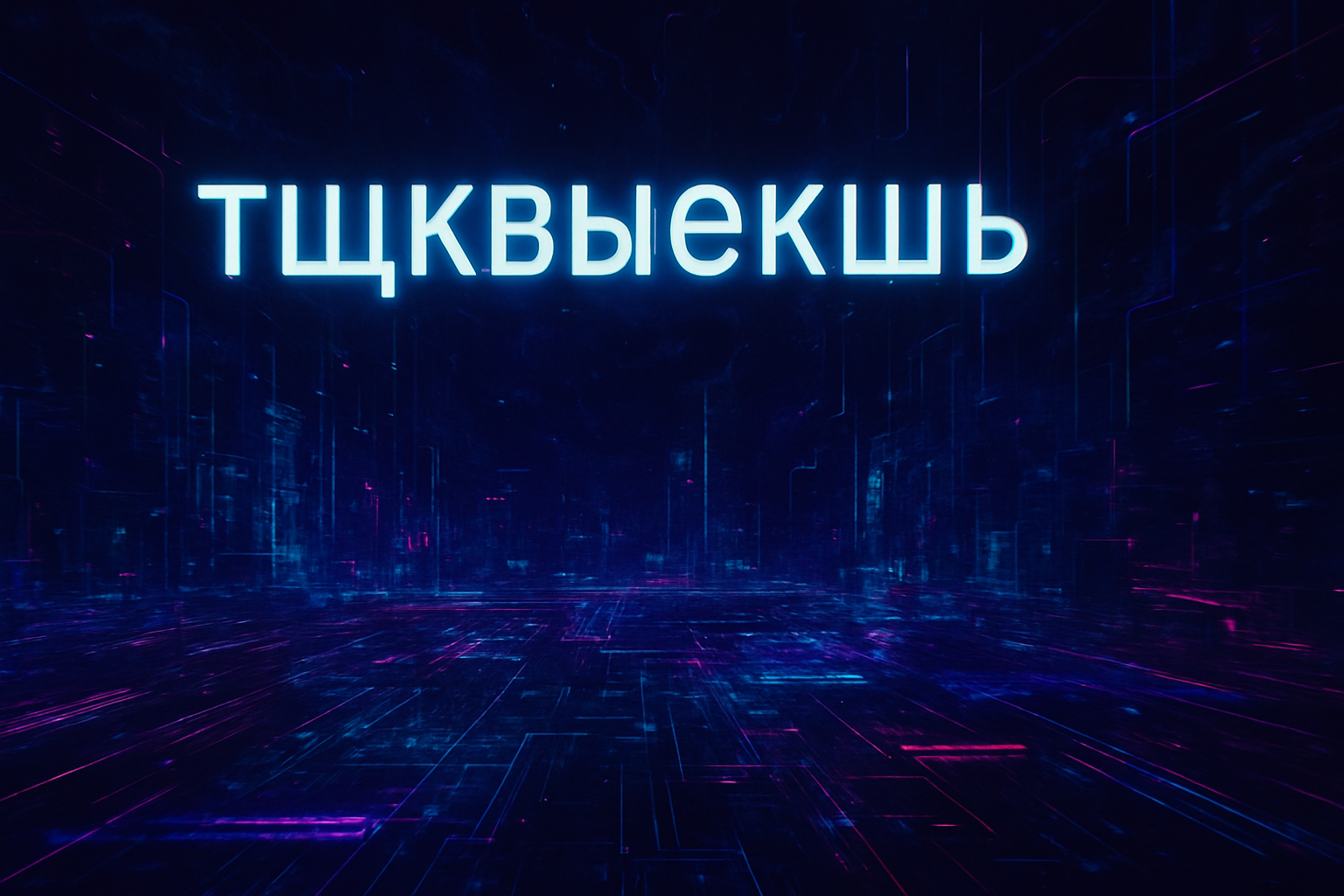
In the ever-evolving world of the internet, certain words or strings of characters appear suddenly and leave users puzzled. One such mysterious term that has caught attention lately is “тщквыекщь.” Though it may appear as random Cyrillic text at first glance, the curiosity it sparks is undeniable. People are searching for its origin, meaning, and relevance — trying to determine whether it’s a code, an accident, or a hidden message.
This article explores тщквыекщь from multiple perspectives — linguistic, cultural, digital, and psychological — to understand why such a mysterious sequence of letters can generate intrigue in the digital space.
What Does “тщквыекщь” Mean?
At face value, тщквыекщь doesn’t appear to have a direct meaning in any known Slavic language that uses the Cyrillic alphabet, such as Russian, Bulgarian, or Ukrainian. The word structure doesn’t fit typical grammatical patterns, and no linguistic database or dictionary lists it as a legitimate term.
So, what is it? The mystery lies in the fact that тщквыекщь could have emerged from various possibilities — an accidental typing error, an encoded message, or even an experimental piece of digital art.
The Keyboard Theory
The most logical explanation for тщквыекщь comes from keyboard translation errors. Many people who type on bilingual keyboards — especially those using both English (QWERTY) and Russian (ЙЦУКЕН) layouts — often forget to switch their language input settings.
If someone typed something meaningful in English while their keyboard was set to Russian, the result could be an unreadable string like тщквыекщь. For instance, typing “tshkvyeksh” on a Russian keyboard could produce that same Cyrillic text.
This means тщквыекщь may not have been intentionally created at all — it might be a digital “accident” that turned into an internet curiosity.
Hidden Code or Digital Placeholder
Another possible explanation is that тщквыекщь functions as a form of test text or placeholder content. Developers, designers, and programmers often use random strings of characters to test websites, databases, or applications before inserting real data.
For example, English speakers use “Lorem ipsum” as filler text in graphic design. Similarly, тщквыекщь might have been typed randomly by someone testing Cyrillic input or encoding compatibility — and later found its way into search results, forums, or even automated systems.
However, its unusual combination of letters gives it an oddly distinctive look — enough to capture attention and invite speculation.
The Digital Aesthetic of Randomness
There’s also a growing online aesthetic built around random digital artifacts — text, code, symbols, and gibberish that look mysterious but are visually appealing. In internet subcultures, this style is often referred to as “glitchcore,” “vaporwave,” or “cybertext.”
From this perspective, тщквыекщь could be interpreted as an artistic symbol — a word that doesn’t need to have meaning because its visual form and mystery create intrigue.
In social media, many users intentionally post cryptic or foreign-looking text to stand out or to give a surreal, futuristic impression. The odd beauty of тщквыекщь lies in its ambiguity — it looks purposeful but defies comprehension.
Linguistic Structure and Phonetic Sound
Phonetically, тщквыекщь can be broken down as “tshk-vye-kshch.” It’s a tough, consonant-heavy word, typical of Cyrillic sound systems, yet it doesn’t flow like natural speech. Its structure resembles a mixture of consonant clusters that would be difficult to pronounce fluently.
Linguistically, this confirms that it’s not likely a real word, but rather an artificial combination. Still, it’s interesting to observe how such patterns evoke a sense of coded speech — almost as if it were a secret password or encrypted term.
Psychological Attraction to Mystery Words
Humans are naturally drawn to the unknown. When people encounter a term like тщквыекщь, their brains immediately attempt to decode it — to look for patterns, context, or meaning. This instinct to find order in randomness is part of our cognitive makeup.
The internet amplifies this behavior. Whenever an unfamiliar word appears online, communities form around it to share theories, memes, or interpretations. This collaborative curiosity turns a meaningless sequence into a trending topic.
In many ways, тщквыекщь represents how modern humans interact with information — questioning everything, decoding patterns, and assigning meaning where none might exist.
Cultural Interpretations and Online Theories
Across forums, chat groups, and social media platforms, several theories have emerged regarding the meaning of тщквыекщь. Some users suggest it could be:
- A bot-generated string from AI training data.
- An encoded message meant to hide real information.
- A username or password that accidentally went public.
- A modern art project symbolizing communication breakdown.
Interestingly, each of these theories reflects how digital culture has evolved. The fact that people consider AI and encryption as possible origins shows how technology now defines our understanding of randomness.
The Symbolism of Digital Chaos
In a philosophical sense, тщквыекщь can be seen as a metaphor for the internet itself — vast, unpredictable, and full of unexplained phenomena. Just like countless bits of data flowing through servers, it exists without clear purpose yet captures attention.
This randomness symbolizes the chaos of digital communication. Every day, billions of characters, usernames, and codes are generated, some meaningful, others not. Among them, a few stand out purely by coincidence — becoming icons of digital serendipity.
тщквыекщь belongs to this category. It’s a fragment of digital noise that has accidentally gained significance because humans found it intriguing.
How Random Terms Become Viral
There’s a fascinating process through which random or meaningless text becomes viral online:
- Discovery – Someone encounters a strange word like тщквыекщь and shares it on social media.
- Curiosity – Others search for it, leading to increased visibility.
- Interpretation – Users create theories or attach meanings to it.
- Replication – Memes, posts, and videos begin referencing the word.
- Cultural Value – Eventually, it becomes a small part of digital culture, remembered for its mystery.
This pattern shows how the internet transforms even meaningless data into cultural artifacts.
Potential for Branding or Digital Identity
Interestingly, the uniqueness of тщквыекщь gives it potential as a digital brand or concept. In an age where distinctiveness is crucial online, even a random word can serve as a brand name, art project, or domain.
Imagine a website named тщквыекщь.com — it would immediately spark curiosity. Visitors would wonder what it means, thereby increasing engagement. Some companies have already used similar strategies by adopting abstract or foreign-sounding names that attract global audiences.
In this sense, тщквыекщь represents the power of uniqueness in digital identity.
The Role of Artificial Intelligence
AI and machine learning systems sometimes generate odd strings like тщквыекщь during data testing or when scraping multilingual text from the web. These outputs can unintentionally enter the public domain, especially if indexed by search engines.
Therefore, it’s possible that тщквыекщь originated from an AI dataset, chatbot training text, or algorithmic experiment. If true, that makes it a small yet fascinating footprint of how artificial intelligence influences modern language.
Conclusion
The mystery of тщквыекщь might never be fully solved — and perhaps that’s the point. Whether it’s a keyboard accident, a random AI creation, or a piece of digital art, its existence reminds us of how meaning is created in the digital world.
From a purely linguistic standpoint, it’s nonsensical. Yet from a cultural perspective, it’s meaningful precisely because it’s mysterious. In an age where everything is defined and categorized, тщквыекщь stands as a reminder that not all things on the internet need explanation — some simply exist to spark imagination.
In the end, тщквыекщь represents the beauty of digital randomness — the intersection between technology, language, and human curiosity. It is a modern enigma that embodies the chaotic, creative, and unpredictable nature of life online.


How AI is Making Financial Management Faster and Smarter in 2026

How HR Compliance Training Builds a Culture of Accountability

How to Turn Casual Listeners Into Loyal Fans on Streaming Platforms

Innovative TikTok Video Concepts: AR Filters and Interactive Polls for Growth

Master the “The Upload Phase”: How the First 12 Hours on SoundCloud Determine Your Reach?

Building Influence with Mixx: A Guide for 2026 Creators

Competitor Shadowing: Using Private Twitter Lists to Monitor Rival Brands

How Wealth Managers Help Protect Your Financial Legacy

What to Expect When Working With an Architect

The Importance of Professional Aircraft Detailing

5starsstocks.com: Your Trusted Resource for Stock Market Insights and Analysis

Who Is Maria Dylan? The Untold Story of Bob Dylan’s Daughter

Jelani Asar Snipes: The Rising Actor You Need to Know About

Everything You Need to Know About Stella Busina Matthews: A Comprehensive Guide

Inside Numberlina.com – Your Trusted Hub for Smart Financial Tools and Calculators

Timothy Byers Affleck: The Father Behind Ben and Casey Affleck

Violet Myers Net Worth: Career Earnings and Life Overview

Inside Showbizztoday.com: Celebrity News and Pop Culture Updates

Who is Karima Jackson? The Untold Story of Ice Cube’s Daughter

Who is Jane Elizabeth Ebsworth Oriel? The Untold Story of David Attenborough’s Wife
5starsstocks.com: Your Trusted Resource for Stock Market Insights and Analysis
Who Is Maria Dylan? The Untold Story of Bob Dylan’s Daughter
Jelani Asar Snipes: The Rising Actor You Need to Know About
Everything You Need to Know About Stella Busina Matthews: A Comprehensive Guide
Inside Numberlina.com – Your Trusted Hub for Smart Financial Tools and Calculators
Timothy Byers Affleck: The Father Behind Ben and Casey Affleck
Violet Myers Net Worth: Career Earnings and Life Overview
Inside Showbizztoday.com: Celebrity News and Pop Culture Updates
Who is Karima Jackson? The Untold Story of Ice Cube’s Daughter
Who is Jane Elizabeth Ebsworth Oriel? The Untold Story of David Attenborough’s Wife
-
 Tech6 months ago
5starsstocks.com: Your Trusted Resource for Stock Market Insights and Analysis
-
 Celebrity11 months ago
Who Is Maria Dylan? The Untold Story of Bob Dylan’s Daughter
-
 Celebrity11 months ago
Jelani Asar Snipes: The Rising Actor You Need to Know About
-
 Uncategorized11 months ago
Everything You Need to Know About Stella Busina Matthews: A Comprehensive Guide
-
 Business10 months ago
Inside Numberlina.com – Your Trusted Hub for Smart Financial Tools and Calculators
-
 Celebrity11 months ago
Timothy Byers Affleck: The Father Behind Ben and Casey Affleck
-
 Uncategorized10 months ago
Violet Myers Net Worth: Career Earnings and Life Overview
-
 Uncategorized10 months ago
Inside Showbizztoday.com: Celebrity News and Pop Culture Updates