
Blog
Winkelbohrspindel: Comprehensive Guide to Function, Benefits, and Industrial Applications

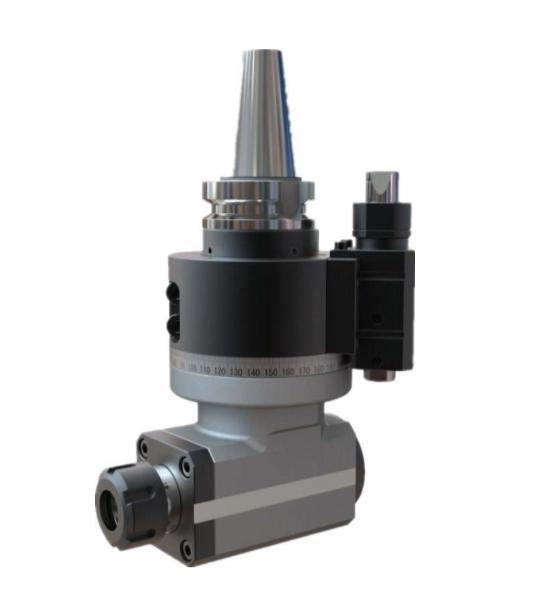
The modern manufacturing industry constantly evolves with new tools, machines, and innovations that increase productivity, accuracy, and versatility. Among these advancements, the Winkelbohrspindel stands out as a crucial element for machining operations that require angled drilling or milling. Whether in automotive engineering, aerospace production, tool-making, or CNC machining, the Winkelbohrspindel has become an indispensable part of precision manufacturing.
This angle drilling spindle enables machining at 90 degrees or other adjustable angles, simplifying processes that previously required manual repositioning or complex multi-axis setups. Its ability to work precisely in confined or difficult-to-reach locations makes it essential for companies seeking efficiency and high-quality results.
What Is a Winkelbohrspindel?
A Winkelbohrspindel is an angle head spindle designed to redirect the machine’s cutting or drilling motion. Instead of operating in the standard vertical or horizontal axis, this spindle changes the direction of rotation to allow angled machining. The most common configuration is 90 degrees, but advanced models can be adjusted to various angles based on production needs.
These spindles are usually used with CNC milling machines, machining centers, drilling stations, and automated production lines. They combine high-precision gears, robust construction, and advanced cooling systems to deliver exceptional performance even under heavy workloads.
Why the Winkelbohrspindel Matters in Modern Manufacturing
The Winkelbohrspindel plays a vital role in industries where complex designs and multi-dimensional machining are required. It allows manufacturers to work on parts without repositioning or designing special fixtures. This saves valuable time, reduces operational costs, and increases production speed.
Flexibility in Machining
With the Winkelbohrspindel, operators can machine internal surfaces, side walls, deep cavities, and tight spaces that conventional tools cannot reach. This flexibility is especially beneficial for creating intricate designs and complex components.
Precision and Accuracy
Maintaining accuracy during angled machining is challenging with traditional setups. By using an angle spindle, the machining direction is precisely controlled, resulting in consistent and accurate cuts. This is crucial for industries such as aerospace and medical device manufacturing.
Reduced Setup Time
A Winkelbohrspindel eliminates the need to reposition a workpiece multiple times. This reduces setup time, minimizes human error, and shortens the overall machining cycle.
Extended Machine Capabilities
Adding a Winkelbohrspindel effectively turns a standard 3-axis CNC machine into a more versatile and capable system similar to a multi-axis machine, without the need for a costly upgrade.
How the Winkelbohrspindel Works
A Winkelbohrspindel uses a complex system of bevel gears and bearings to redirect the rotational energy of the machine’s spindle. When the main spindle rotates, the gear mechanism inside the angle head transfers this rotation to the tool holder at a perpendicular or adjustable angle.
Key components include:
-
High-precision bevel gears
-
Reinforced spindle housing
-
Heavy-load bearings
-
Cooling and lubrication channels
-
Compatible tool holders (HSK, BT, SK, ER, and custom options)
The combination of these elements allows the spindle to operate smoothly at high speeds while maintaining stability and accuracy.
Types of Winkelbohrspindel
Fixed Angle Winkelbohrspindel
These spindles are designed to maintain a permanent angle, usually 90 degrees. They are ideal for repetitive tasks such as drilling side holes or machining consistent geometries.
Adjustable Angle Winkelbohrspindel
Adjustable models allow operators to set the spindle at different angles. This is perfect for machining multiple angled surfaces without switching tools or setups.
High-Speed Winkelbohrspindel
Designed for high-speed cutting operations, these spindles are used for fine milling, engraving, and micro-machining tasks requiring precision at high RPMs.
Heavy-Duty Winkelbohrspindel
Created for demanding applications, these models can handle large-diameter drilling, deep machining, and heavy metal removal tasks.
Compact Angle Spindles
When working in narrow areas or deep cavities, compact spindles provide the necessary accessibility without compromising performance.
Applications of the Winkelbohrspindel
The Winkelbohrspindel is widely used across several industries due to its versatility and precision.
Automotive Industry
Automotive manufacturers rely on Winkelbohrspindeln for machining engine blocks, transmission housings, cylinder heads, and chassis components. The spindle’s ability to reach tight corners greatly simplifies complex production tasks.
Aerospace Sector
In aerospace engineering, precision is critical. The Winkelbohrspindel is ideal for drilling angled holes in turbine blades, structural parts, aluminum alloys, titanium components, and composite materials.
Mold and Tool Making
Angle spindles are essential for crafting molds with deep cavities, side pockets, and complex contours. Toolmakers use them to achieve high-precision features that standard spindles cannot reach.
CNC Machining Centers
Many shops use Winkelbohrspindeln to enhance 3-axis CNC machines, giving them the capabilities of multi-axis setups without the high investment costs.
Medical Device Production
Medical components require micro-level precision. The Winkelbohrspindel enables fine drilling, shaping, and milling of implants and surgical tools.
Industrial Construction and Fabrication
Fabricators use angle spindles for drilling steel beams, heavy plates, and structural components where direct access is limited.
Advantages of Using a Winkelbohrspindel
Increased Accessibility
The primary benefit is access to areas where standard tools cannot reach, resulting in better part quality and improved design flexibility.
Lower Production Costs
By reducing setups, fixtures, and manual operations, companies save time and money.
Consistent Quality Output
Because the workpiece remains in a fixed position, machining accuracy improves, leading to uniform results every time.
Enhanced Tool Life
Better lubrication, correct angle orientation, and optimized cutting loads contribute to longer tool life and improved performance.
Important Considerations When Using a Winkelbohrspindel
Load and Speed Limits
Angle heads have specific limits for torque, RPM, and cutting forces. Exceeding these can cause overheating or mechanical wear.
Proper Programming
Correct feed rates, spindle speeds, and tool paths must be used to avoid vibration and ensure precise machining.
Thermal Management
High-speed operations produce heat; therefore, proper cooling is essential to maintain dimensional stability.
Gear and Bearing Maintenance
Regular inspection of gear play, lubrication levels, and bearing condition ensures long-term reliability.
How to Choose the Right Winkelbohrspindel
Identify Your Machining Requirements
Consider whether you need high torque, high speed, heavy-duty cutting, or fine precision work.
Check Machine Compatibility
Ensure the angle spindle matches your CNC machine’s interface, tool holder system, and maximum spindle speed.
Evaluate Workpiece Design
Choose compact or adjustable models depending on the geometry of your parts.
Confirm Cooling and Lubrication Needs
Heavy operations require advanced cooling to maintain quality and protect the spindle.
Maintenance Tips for Winkelbohrspindeln
-
Regularly lubricate internal gears
-
Avoid overloading or exceeding speed limits
-
Store the spindle in a clean, dry environment
-
Check temperature and vibration during operation
-
Inspect bearings and gears frequently
Following these practices ensures long-term performance and prevents unexpected downtime.
Future Developments of Winkelbohrspindel Technology
Manufacturers are integrating smart features such as embedded sensors, automatic lubrication systems, vibration alert indicators, and lightweight composite housings. As Industry 4.0 evolves, the Winkelbohrspindel is becoming more intelligent, allowing predictive maintenance and improved process control.
Conclusion
The Winkelbohrspindel is a powerful and versatile tool that plays a vital role in precision machining. From automotive production to aerospace engineering and mold-making, its ability to machine at various angles makes it a highly valuable asset. With better flexibility, reduced setup times, improved accuracy, and lower operational costs, the Winkelbohrspindel continues to transform modern manufacturing processes.


How AI is Making Financial Management Faster and Smarter in 2026

How HR Compliance Training Builds a Culture of Accountability

How to Turn Casual Listeners Into Loyal Fans on Streaming Platforms

Innovative TikTok Video Concepts: AR Filters and Interactive Polls for Growth

Master the “The Upload Phase”: How the First 12 Hours on SoundCloud Determine Your Reach?

Building Influence with Mixx: A Guide for 2026 Creators

Competitor Shadowing: Using Private Twitter Lists to Monitor Rival Brands

How Wealth Managers Help Protect Your Financial Legacy

What to Expect When Working With an Architect

The Importance of Professional Aircraft Detailing

5starsstocks.com: Your Trusted Resource for Stock Market Insights and Analysis

Who Is Maria Dylan? The Untold Story of Bob Dylan’s Daughter

Jelani Asar Snipes: The Rising Actor You Need to Know About

Everything You Need to Know About Stella Busina Matthews: A Comprehensive Guide

Inside Numberlina.com – Your Trusted Hub for Smart Financial Tools and Calculators

Timothy Byers Affleck: The Father Behind Ben and Casey Affleck

Violet Myers Net Worth: Career Earnings and Life Overview

Inside Showbizztoday.com: Celebrity News and Pop Culture Updates

Who is Karima Jackson? The Untold Story of Ice Cube’s Daughter

Who is Jane Elizabeth Ebsworth Oriel? The Untold Story of David Attenborough’s Wife
5starsstocks.com: Your Trusted Resource for Stock Market Insights and Analysis
Who Is Maria Dylan? The Untold Story of Bob Dylan’s Daughter
Jelani Asar Snipes: The Rising Actor You Need to Know About
Everything You Need to Know About Stella Busina Matthews: A Comprehensive Guide
Inside Numberlina.com – Your Trusted Hub for Smart Financial Tools and Calculators
Timothy Byers Affleck: The Father Behind Ben and Casey Affleck
Violet Myers Net Worth: Career Earnings and Life Overview
Inside Showbizztoday.com: Celebrity News and Pop Culture Updates
Who is Karima Jackson? The Untold Story of Ice Cube’s Daughter
Who is Jane Elizabeth Ebsworth Oriel? The Untold Story of David Attenborough’s Wife
-
 Tech6 months ago
5starsstocks.com: Your Trusted Resource for Stock Market Insights and Analysis
-
 Celebrity11 months ago
Who Is Maria Dylan? The Untold Story of Bob Dylan’s Daughter
-
 Celebrity11 months ago
Jelani Asar Snipes: The Rising Actor You Need to Know About
-
 Uncategorized11 months ago
Everything You Need to Know About Stella Busina Matthews: A Comprehensive Guide
-
 Business10 months ago
Inside Numberlina.com – Your Trusted Hub for Smart Financial Tools and Calculators
-
 Celebrity11 months ago
Timothy Byers Affleck: The Father Behind Ben and Casey Affleck
-
 Uncategorized10 months ago
Violet Myers Net Worth: Career Earnings and Life Overview
-
 Uncategorized10 months ago
Inside Showbizztoday.com: Celebrity News and Pop Culture Updates